Eating Disorders, Body Dysmorphia, and Pelvic Pain
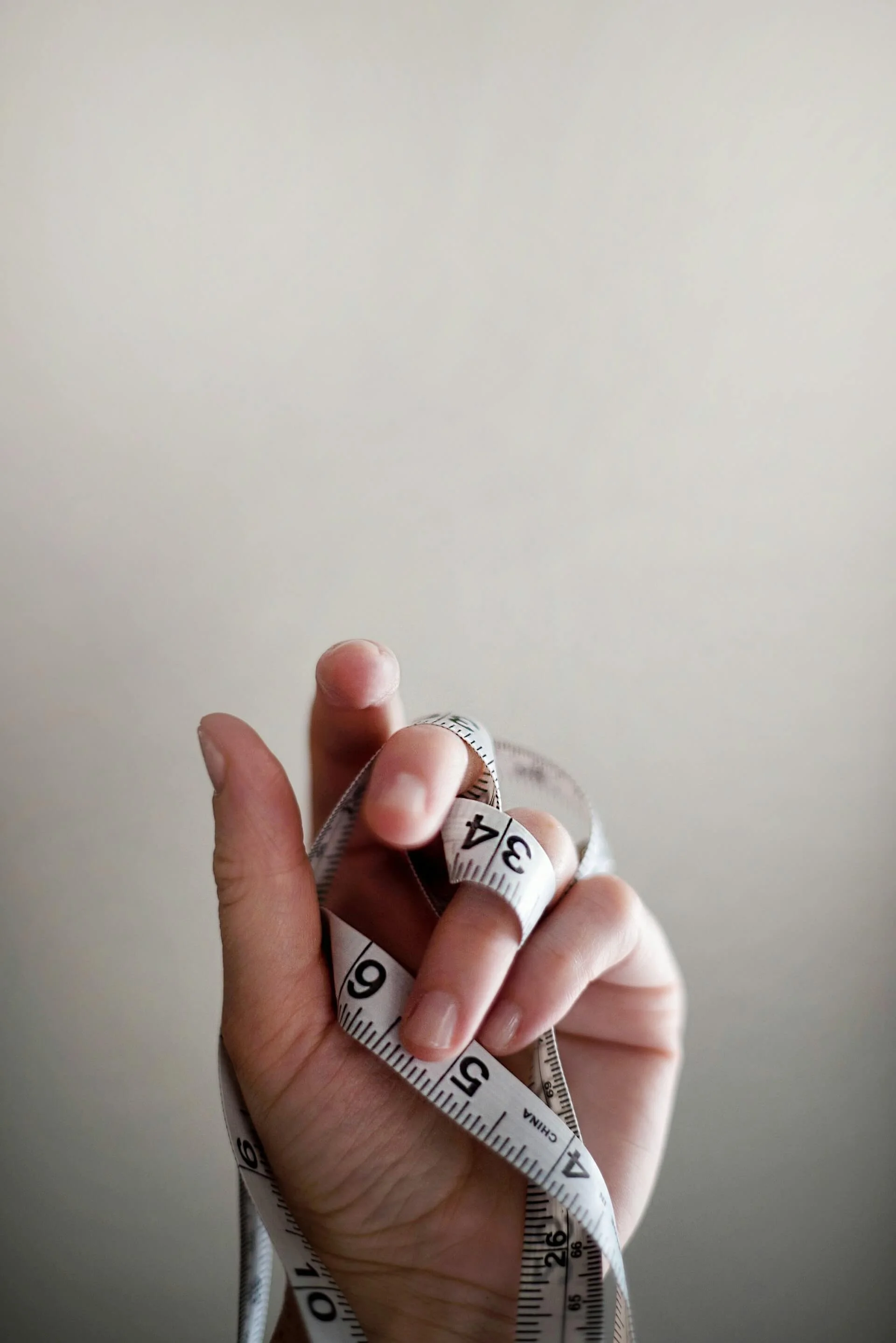
First of all, there is a lot of evidence showing that people who have struggled with disordered eating are more likely to struggle with chronic pain conditions, including pelvic pain.
Now as you may already know if you have read through my content, I believe that a large percentage of chronic pain does not have a structural root cause. Something important to remember is that tissues and injuries generally heal in a predictable way. Once an injury has healed, there should not be a reason for pain to continue indefinitely. A good example of this is phantom limb pain. The limb is gone, yet the brain still produces very real pain signals.
Because of my obsession with my body, the way it looked, and exercise in general, I ended up getting my college degree in Exercise Science. At the time I truly believed it was my ticket to being skinny for the rest of my life. I also trained for and ran two marathons for this same reason. I figured I would naturally be skinny by proxy of doing these things. Not true by the way. My deeply rooted issues with my body and self esteem always found a way to creep back in.
Looking back now, I do believe my pelvic pain problems started with my exercise addiction. I never gave my body a chance to recover. Even when I was in massive amounts of pain, I still felt like I had to work out. Or else. Or else I would get fat again. Or else I would lose all the progress I had made.
That kind of thinking keeps the nervous system in a constant state of pressure.
My methodology with clients now is very different. Yes, yes, yes I want people to continue to move. Movement is important. But the type and intensity of movement matters. Sometimes that means starting with simple bodyweight exercises. Sometimes that means walking. Sometimes it means intentionally adding strength work back in slowly as the nervous system becomes more regulated.
In the early years of my pelvic pain I refused to listen to my body’s signals. I simply would not do it. I made what I thought was a compromise. I told myself I would stop going to CrossFit but I would go to Pure Barre instead. So even though I was no longer lifting heavy weights, I was still doing intense core work five days a week with poor mechanics and constant tension in my pelvic floor.
Looking back now that was still far too much for a nervous system that was already in a heightened state. Instead of allowing my body to calm down and heal, I was unintentionally keeping my pelvic floor dysfunction and nervous system dysregulation running in the background for years. If I had scaled down my movement earlier and returned to exercise with a thoughtful plan, my pain likely would not have persisted for four full years.
Something I now understand much more clearly is that eating disorders and chronic pain often share similar psychological and nervous system patterns.
People who have struggled with disordered eating often have traits like perfectionism, high self pressure, and a strong need to control their bodies.
We become very good at ignoring hunger, overriding fatigue, and pushing through physical signals that our bodies are trying to send us. Over time this can create a relationship with the body that is based on control rather than cooperation.
Chronic pain often develops in the same environment. The nervous system becomes highly vigilant and constantly scans the body for sensations. When the brain interprets those sensations as dangerous, it can amplify them into pain signals even when the tissues themselves are healthy. This does not mean the pain is imaginary. It means the brain has learned a protective pattern that has become overactive.
Many people who develop chronic pelvic pain have a history of being extremely disciplined with their bodies. Athletes, high achievers, perfectionists, people who push themselves hard. In my case that discipline was deeply intertwined with my body image and my fear of gaining weight. My body had been under years of pressure. Pressure to look a certain way. Pressure to perform. Pressure to keep going no matter what. Eventually my nervous system simply did not know how to turn that pressure off.
Looking back now there are a few things I would have done very differently. The first is that I would have taken my nervous system much more seriously. For a long time I believed the problem was in my pelvic floor muscles, my alignment, my core strength, or something structural that needed to be fixed. But through the work I later studied in Pain Reprocessing Therapy, particularly through the work of Alan Gordon and the broader PRT framework, I began to understand something very different about chronic pain. When pain becomes chronic it is often not because the tissues are still injured but because the brain and nervous system have learned a pain pathway that keeps firing even after the original injury has healed. In other words the nervous system becomes stuck in protection mode.
If I could go back I would have stopped trying to fix my body so aggressively and started focusing much sooner on calming my nervous system. I also would have changed my relationship with movement much earlier. Movement is important and I still believe that strongly, but the way I was approaching movement was driven by fear and pressure.
I was not exercising because it supported my health. I was exercising because I was afraid of what would happen if I stopped.
Today when I work with clients we still move, but the approach is very intentional. We remove the pressure. We scale the intensity. We rebuild trust in the body. Sometimes that means starting with simple movements. Sometimes it means walking. Sometimes it means gradually reintroducing strength training as the nervous system becomes more regulated and the brain learns that movement is safe again.
One of the biggest shifts in my own recovery was learning to approach my body with curiosity instead of control. Instead of asking how I could force my body to behave the way I wanted, the question became what is my nervous system trying to tell me right now. Another major piece was addressing the fear around my symptoms. Fear is one of the biggest drivers of chronic pain. When the brain interprets a sensation as dangerous it can amplify that sensation dramatically. One of the core principles of Pain Reprocessing Therapy is teaching the brain that the sensations it is producing are not dangerous. When the brain no longer perceives threat the pain pathways can begin to quiet down.
If someone had explained this to me earlier it probably would have saved me years of suffering.
